Google Scholar | LinkedIn | Github
Email: cwang38 [at] kennesaw [dot] edu
Office: 680 Arntson Drive, J-3425
Marietta, GA 30360, USA
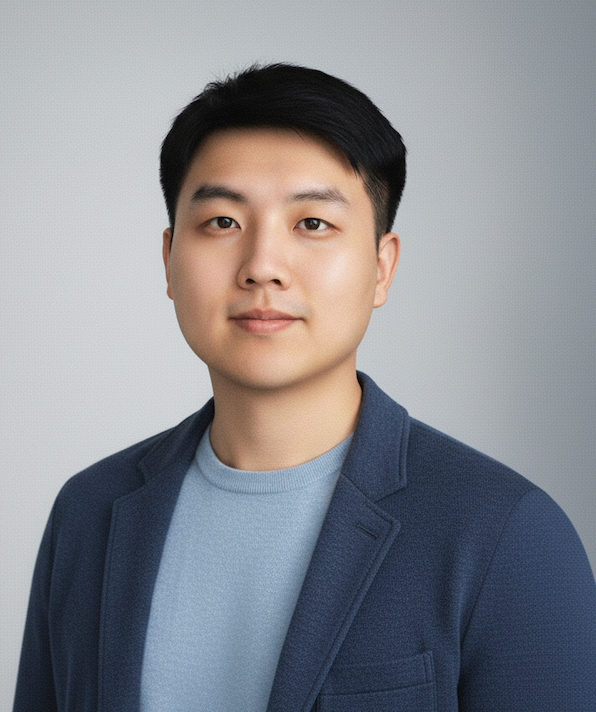
I am an Assistant Professor in the Department of Software Engineering and Game Development at Kennesaw State University (KSU). I received my Ph.D. Degree from the Department of Computer Science at Georgia State University (GSU) under the supervision of Dr. Yingshu Li and Dr. Zhipeng Cai. I received my M.Sc. degree and B.Sc. degree from Beijing Normal University and Xiangtan University in 2019 and 2016, respectively.
My research interests span the areas of the Internet of Things, Generative AI, and blockchain systems. I have a specific interest in architectures and algorithms for enabling future high-fidelity, interactive, and trustworthy digital twin software systems.
🚀 Currently Recruiting:
I am looking for self-motivated undergraduate/graduate students with mathematical and programming skills to work with me on Internet of things, Human-AI interaction, Generative AI, and Blockchain related projects. If you are interested, please email me your CV and indicate your goals.
Last Updated on November 25, 2025
Selected Publications
Journals
Amirgholy, M., Chowdhoury, T.F.A., Wang, C., Kanigiri, N. (2026). Predictive Analysis of Greenhouse Gas Emissions from Electric Vehicle Charging in the United States. (Under Review).
Wang, C., Sai, A. M. V. V., Wang, K., Li, Y. (2025). Joint Information Freshness Optimization for Digital Twin Communication Infrastructure through Hierarchical Deep Reinforcement Learning. Accepted by Intelligent and Converged Networks.
Suleiman, R., Sai, A. M. V. V., Yu, W., Wang, C. (2025). Blockchain for Security in Digital Twins. Future Internet. 17(9):385. DOI: 10.3390/FI17090385
Wang, C., Li, Y., Cai, Z. (2025). Human Activity Recognition in Mobile Edge Computing: A Low-Cost and High-Fidelity Digital Twin Approach with Deep Reinforcement Learning. IEEE Transactions on Consumer Electronics. 71(2):6451-6459. DOI: 10.1109/TCE.2024.3375859
Pei, M., Wang, C., Wang, X., Zheng, Z., Huang, J., Wang, S., Guo, Y. (2025). Hierarchical Reverse Games for the Resource Ecosystem in Cloud-Edge Computing. IEEE Transactions on Consumer Electronics. 71(2):4039-4052. DOI: 10.1109/TCE.2024.3415572
Zia, Q., Wang, C., Zhu, S., Li, Y. (2024). Priority based inter-twin communication in vehicular digital twin networks. International Journal of Parallel, Emergent and Distributed Systems, 1–16. DOI: 10.1080/17445760.2024.2398082
Sai, A. M. V. V., Wang, C., Cai, Z., Li, Y. (2024). Navigating the Digital Twin Network Landscape: A Survey on Architecture, Applications, Privacy and Security. High-Confidence Computing. 4(4):100269. DOI: 10.1016/J.HCC.2024.100269
Shi, H., Wang, C., Zhao, H., Wang, S., Chen, Y. (2024). Bioinvasion risk analysis based on automatic identification system and marine ecoregion data. High-Confidence Computing. 4(4):100210, 2024. DOI: 10.1016/J.HCC.2024.100210
Wang, C., Cai, Z., Seo, D., Li, Y. (2023). TMETA: Trust Management for the Cold Start of IoT Services with Digital-Twin-Aided Blockchain. IEEE Internet of Things Journal. 10(24):21337-21348. DOI: 10.1109/JIOT.2023.3285108
Wang, C., Cai, Z., Li, Y. (2023). Sustainable Blockchain-based Digital Twin Management Architecture for IoT Devices. IEEE Internet of Things Journal. 10(8):6535-6548. DOI: 10.1109/JIOT.2022.3153653
Wang, C., Li, Y. (2022). Digital-Twin-Aided Product Design Framework For IoT Platforms. IEEE Internet of Things Journal, 9(12), 9290-9300. IEEE Internet of Things Journal. 10(8):6535-6548. DOI: 10.1109/JIOT.2021.3100796
Wang, S., Wang, C., Wang, S., Ma, L. (2018). Big Data Analysis for Evaluating Bioinvasion Risk. BMC Bioinformatics, 19(9):287. DOI: 10.1186/s12859-018-2272-5
Conference
Chowdhoury, T.F.A., Wang, C., Amirgholy, M. (2026). Machine learning for predictive analysis of tailpipe and grid emissions from electric vehicle charging across the United States. Poster Session, the 105th TRB Annual Meeting, 2026. Online Program
Gabriel, K., Rocker, J., Chowdhoury, T.F.A., Wang, C., Amirgholy, M. (2026). Machine learning for scenario-based prediction of grid emissions from electric vehicle charging across the United States. Lectern Session, the 105th TRB Annual Meeting, 2026. Online Program
Wang S., Wang C., Hu, Q. (2019). Corking by forking: Vulnerability analysis of blockchain. Proceedings of IEEE INFOCOM 2019 - IEEE Conference on Computer Communications, Paris, France (pp. 829-837). IEEE. DOI: 10.1109/INFOCOM.2019.8737490
Liu, C., Wang, S., Wang, C., Bie, R., Shin, D. (2016). Stackelberg Game Based Optimal Workload Allocation and Pricing Mechanism in Crowdsourcing. Proceedings of 2016 IEEE International Conferences on Big Data and Cloud Computing, Social Computing and Networking, Sustainable Computing and Communications (BDCloud-SocialCom-SustainCom 2016) (pp. 193-200). IEEE. DOI: 10.1109/BDCloud-SocialCom-SustainCom.2016.39
Liu, C., Du, R., Wang, S., Wang, C., Bie. R., Kim, C. (2016). Crowdsourcing Framework For Acoustic Sound Based Obstacle Echolocation Through Smartphones For Visually Impaired. Proceedings of 2016 IEEE International Conferences on Big Data and Cloud Computing, Social Computing and Networking, Sustainable Computing and Communications (BDCloud-SocialCom-SustainCom 2016), (pp. 185-192). IEEE. DOI: 10.1109/BDCloud-SocialCom-SustainCom.2016.38
Wu, X., Wang, S., Liu, C., Sun, W., Wang, C.. (2016). Stackelberg game based tasks assignment mechanism using reputation in crowdsourcing. Proceedings of 2016 International Conference on Identification, Information and Knowledge in the Internet of Things (IIKI) (pp. 332-339). IEEE. DOI: 10.1109/IIKI.2016.36
Yu, X., Wang S., Liu, C., Wang, C., Sun, W. (2016). Circle-Covering Algorithm for Multiple-POI Searching. Proceedings of 2016 International Conference on Identification, Information and Knowledge in the Internet of Things (IIKI) (pp. 357-360). IEEE. DOI: 10.1109/IIKI.2016.16
Teaching Activities
@KSU
SWE 3633 - Software Architecture and Design - Spring 2026, Fall 2025, Spring 2025, Fall 2024.
SWE 6653 - Software Architecture - Fall 2025, Fall 2024.
SWE 5063 - Foundations DB and Web - Spring 2026, Spring 2025.
@GSU
CSC 2510 - Theoretical Foundation of Computer Science, Spring 2023.
Students Mentored
PhD Students
Jubayer Hossain, PhD in Computer Science, KSU, Fall 2025 - Present.
MS Students
Laeticia Neno Aloyem, MS in Cybersecurity, KSU, Fall 2025 - Present.
Swetha Kakaraparthi, MS in Information Technolgy, KSU, Spring 2025 - Fall 2025.
Raghava Sammeta, MS in Computer Science, KSU, Spring 2025 - Summer 2025.
Undergraduate Students
Braylan Mann, BS in Computer Engineering, KSU, Fall 2025 - Present.
Maan Bhagat, BS in Software Engineering, KSU, Spring 2025 - Summer 2025.
Honggeun Ji, BS in Computer Science, Hanyang University & GSU, Fall 2022.
Professional Activities
Guest Editors
Special Issue on Wireless Artificial Intelligent Computing Systems and Applications (WASA), Electronics, 2025.
Special Issue on AI in Network Security: Recent Advances and Prospects, Electronics, 2025.
Services
TPC member, The 35th International Conference on Computer Communications and Networks (ICCCN), 2026.
TPC member, The 19th International Conference on Wireless Artificial Intelligent Computing Systems and Applications (WASA), 2025.
TPC member, The 34th International Conference on Computer Communications and Networks (ICCCN), 2025.
Session chair, The 43rd IEEE -- International Performance Computing and Communications Conference (IPCCC), 2024.
Reviewers
IEEE Transactions on Industrial Informatics (TII)
IEEE Transactions on Computational Social Systems (TCSS)
IEEE Transactions on Network Science and Engineering (TNSE)
IEEE Internet of Things Journal (JIoT)
IEEE Transactions on Vehicular Technology (TVT)
IEEE Transactions on Mobile Computing (TMC)
IEEE Transactions on Wireless Communications(TWC)
IEEE Access
Elsevier High-Confidence Computing (HCC)
Elsevier Computer Communications (COMCOM)
Elsevier Journal of Network and Computer Applications (JNCA)
Elsevier Neural Networks (NEUNET)
Frontiers in Public Health
IEEE Transactions on Biometrics, Behavior, and Identity Science (TBIOM)
Journal of Cybersecurity and Privacy
Tsinghua Science and Technology
IEEE Transactions on Cloud Computing (TCC)
Memberships
IEEE Member, 2021-Present.
ACM Member, 2025-Present.
IEEE Computer Society, 2025-Present.
IEEE Commmunication Society, 2025-Present.
Alumni
INformation Security and Privacy: Interdisciplinary Research and Education (INSPIRE Center), GSU, 2021-2024.
Innovative Computing and Networking (ICN), GSU, 2021-2024.
Talks
Towards High-fidelity Digital Twin in the Internet of Things, Doctoral Dissertation Defense, Department of Computer Science, Georgia State University, Jun. 2024.
(Invited) Towards High-fidelity Digital Twin in the Internet of Things, Presented at Seminars: Graduate Lecture Series, Department of Electrical and Computer Engineering, Virginia Commonwealth University, https: //egr.vcu.edu/departments/electrical/research/seminars/, Sep. 2023.
Sustainable Blockchain-based Digital Twin Management Architecture for IoT Devices, Presented at CS Demo Day, Georgia State University, Spring 2022.
Corking by Forking: Vulnerability Analysis of Blockchain, Presented at the IEEE International Conference on Computer Communications (INFOCOM 2019), Paris, France, May 2019.
Useful Resources
Conferences
Research Grants & Fundings
© 2025 Chenyu's log